
How to Start a Christian Boys Ministry at Your Church
Boys need a place where they can belong.
They need adults who will invest in them, friends who will encourage them, opportunities to try new things, and a place where they can ask questions about faith and life.
A Christian boys ministry can provide all of these things while helping boys grow in their relationship with Jesus Christ.
But starting a boys ministry can feel overwhelming. Where do you begin? What should you do at your first meeting? How many boys do you need? What activities should you plan?
The good news is that you don’t need a perfect program to get started.
You need a vision, a few committed adults, and a willingness to take the first step.
Here are seven practical steps for starting a Christian boys ministry at your church.
1. Start With Prayer and a Clear Purpose
Before choosing activities, choosing a name, or planning your first meeting, determine why your church wants to have a boys ministry.
A Christian boys ministry should be about more than keeping boys busy.
The goal is to help boys grow in their relationship with Christ and develop into young men who know God’s Word, understand their identity in Christ, serve others, and live out their faith.
Spend time praying about the ministry and talking with your pastor and church leaders.
Ask questions such as:
-
What do the boys in our church and community need?
-
How can we help boys grow spiritually?
-
What role should parents and families play?
-
What ages should we serve?
-
What kind of activities will help us connect with boys?
-
How will we measure whether the ministry is accomplishing its purpose?
A clear purpose will help you make better decisions as the ministry develops.
2. Find Two or Three Committed Leaders
You don’t need a large staff to begin.
In fact, a small group of committed men can be a great place to start.
Look for men who love Jesus, enjoy working with boys, and are willing to invest their time. They don’t need to be professional youth workers or outdoor experts.
They simply need to care about boys and be willing to learn.
Consider finding leaders with different strengths. One person might enjoy teaching. Another might love camping and outdoor activities. Someone else might be good at organizing projects or connecting with parents.
Most importantly, find adults who understand that relationships come first.
A boy may forget the details of a particular activity years from now. He may not remember exactly what lesson was taught at a meeting.
But he may remember the counselor who believed in him, listened to him, encouraged him, and showed him what it looks like to follow Jesus.
3. Build the Ministry Around Relationships
Boys don’t simply need another class.
They need relationships.
A good boys ministry creates opportunities for boys to spend time with trusted adults and with one another.
That might happen around a campfire, while working on a project, during a game, on a hike, or while serving someone in the community.
These activities create natural opportunities for conversations about faith.
Instead of making every interaction feel like a lesson, look for ways to incorporate biblical truth into the things boys are already doing.
Talk about God’s creation while hiking.
Talk about perseverance while completing a difficult project.
Talk about serving others while working on a service project.
Talk about trust and responsibility while learning a new skill.
Faith becomes something boys experience in everyday life.
4. Give Boys Something to Do
Boys generally don’t want to sit in a room and listen for an hour.
That doesn’t mean they don’t want to learn.
It means they often learn best when they’re actively involved.
A Christian boys ministry can incorporate activities such as:
-
Outdoor adventures
-
Camping
-
Hiking
-
Canoeing
-
Fishing
-
Cooking
-
Woodworking
-
Crafts
-
Games
-
Service projects
-
First aid
-
Nature activities
-
Skill-building projects
-
Team challenges
The possibilities are almost endless.
The key is to choose activities that give boys opportunities to do things together.
Activities also provide natural opportunities to teach character.
Boys can learn patience when a project doesn’t work the first time.
They can learn responsibility when they are trusted with a task.
They can learn teamwork when they have to work together.
They can learn perseverance when something is difficult.
And they can learn service when they use their abilities to help someone else.
5. Make God’s Word Part of the Experience
A Christian boys ministry should have a clear connection to Scripture.
But that doesn’t mean every meeting needs to look like a traditional Bible study.
Find ways to connect God’s Word to what boys are doing.
A camping trip can become an opportunity to talk about God’s creation.
A service project can lead to a discussion about loving our neighbors.
A lesson about honesty can connect with a boy’s experience at school.
A difficult outdoor challenge can open a conversation about perseverance and trusting God.
The goal is to help boys understand that Christianity isn’t simply something that happens at church on Sunday.
Following Jesus affects every part of life.
6. Get Parents Involved
Parents are essential partners in a Christian boys ministry.
Communicate clearly with parents about the ministry’s purpose, schedule, activities, and expectations.
Invite parents to participate when appropriate.
Keep them informed about what their sons are learning and doing.
And remember that the ministry isn’t intended to replace the role of parents. It should support and encourage families as they disciple their children.
You may even discover that parents have skills, interests, and experiences that can strengthen the ministry.
A grandfather who enjoys woodworking might lead a project.
A father with first-aid training might help teach basic first aid.
A dad who loves camping might assist with an outdoor adventure.
When families become part of the ministry, the impact can extend far beyond the weekly meeting.
7. Start Small and Grow
One of the biggest mistakes you can make is thinking you need everything figured out before you begin.
You don’t.
You don’t need 30 boys.
You don’t need a huge budget.
You don’t need a dedicated building.
You don’t need dozens of activities planned six months in advance.
Start with the boys God has already placed around you.
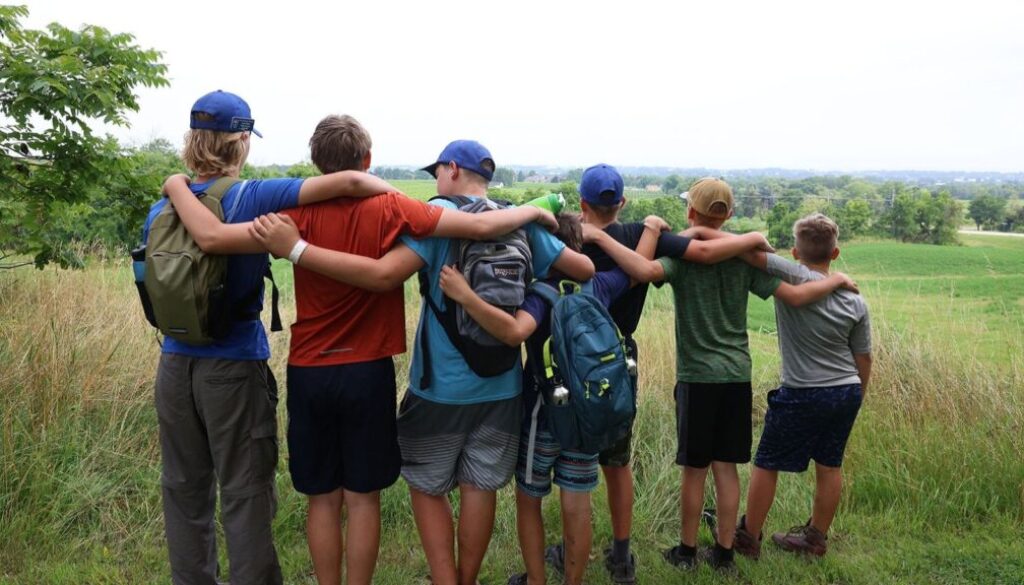
Maybe your first meeting has five boys.
That’s five boys who now have another opportunity to build friendships, develop skills, hear God’s Word, and grow in their faith.
Start with one meeting.
Then another.
Learn what works.
Listen to the boys.
Talk with parents.
Encourage your leaders.
Adjust as you go.
Over time, a small group can become a thriving ministry.
What Should a Christian Boys Ministry Look Like?
There isn’t one right way to run a boys ministry.
Every church is different.
Some churches may meet weekly. Others may meet twice a month.
Some may focus heavily on outdoor activities. Others may emphasize projects, service, or practical skills.
Some may have a handful of boys. Others may have several groups organized by age.
What matters most is that the ministry has a clear purpose and consistently points boys toward Jesus.
A helpful boys ministry brings together several important elements:
Faith. Boys encounter God’s Word and learn what it means to follow Jesus.
Relationships. Boys develop friendships and build relationships with caring Christian adults.
Activity. Boys have opportunities to learn, explore, create, compete, and serve.
Character. Boys are encouraged to develop qualities that reflect Christ.
Adventure. Boys experience things that challenge them and give them opportunities to grow.
Service. Boys learn that their abilities and blessings can be used to help others.
You Don’t Have to Start From Scratch
If your church wants to start a Christian boys ministry, you don’t necessarily have to create the entire program yourself.
The Calvinist Cadet Corps has been helping churches provide Christian boys ministry since 1952.
Cadets is designed for boys and their counselors and combines Bible study, Christian character development, practical skills, outdoor activities, service, and adventure.
Local Cadet clubs meet through churches and can adapt the program to fit their own setting, schedule, resources, and boys.
Instead of spending months creating lessons, activities, projects, and resources from scratch, a church can use an established framework and focus its energy on what matters most: building relationships with boys and helping them grow in Christ.
If your church is considering starting a boys ministry, we’d love to help.
Learn more about Cadets and discover how your church can get started.
Start With a Few Boys
Starting a Christian boys ministry doesn’t have to be complicated.
It starts with a willingness to invest in boys.
It starts with a few adults who care.
It starts with a church that believes boys matter.
And sometimes it starts with just a few boys.
A few boys who need a friend.
A few boys who need someone to believe in them.
A few boys who need to hear that God created them and loves them.
A few boys who need to discover that following Jesus can shape every part of their life.
You don’t have to know exactly where the journey will lead.
You just have to be willing to take the first step.
Start small. Build relationships. Open God’s Word. Give boys opportunities to grow. And point them toward Jesus.
The ministry you start today could make a difference in a boy’s life for years to come.
If you have comments or questions about this article, please let us know – info@calvinistcadets.org.